Thematic analysis is a way of finding patterns of meaning across a set of qualitative data, such as interview transcripts. Reflexive thematic analysis is the approach developed by Virginia Braun and Victoria Clarke.
What makes it reflexive
In this approach, themes are not waiting in the data to be found. The researcher builds them through close, repeated engagement with the data. The researcher’s own position, knowledge and assumptions shape the analysis, and the approach asks them to reflect on that openly instead of trying to remove it.
The six phases
Braun and Clarke describe six phases. They are a guide, and researchers move back and forth between them.
The first is getting to know the data by reading and rereading it.
The second is coding, which means labelling pieces of the data that are relevant to the research question.
The third is generating initial themes by bringing related codes together.
The fourth is developing and reviewing the themes against the coded data and the whole data set.
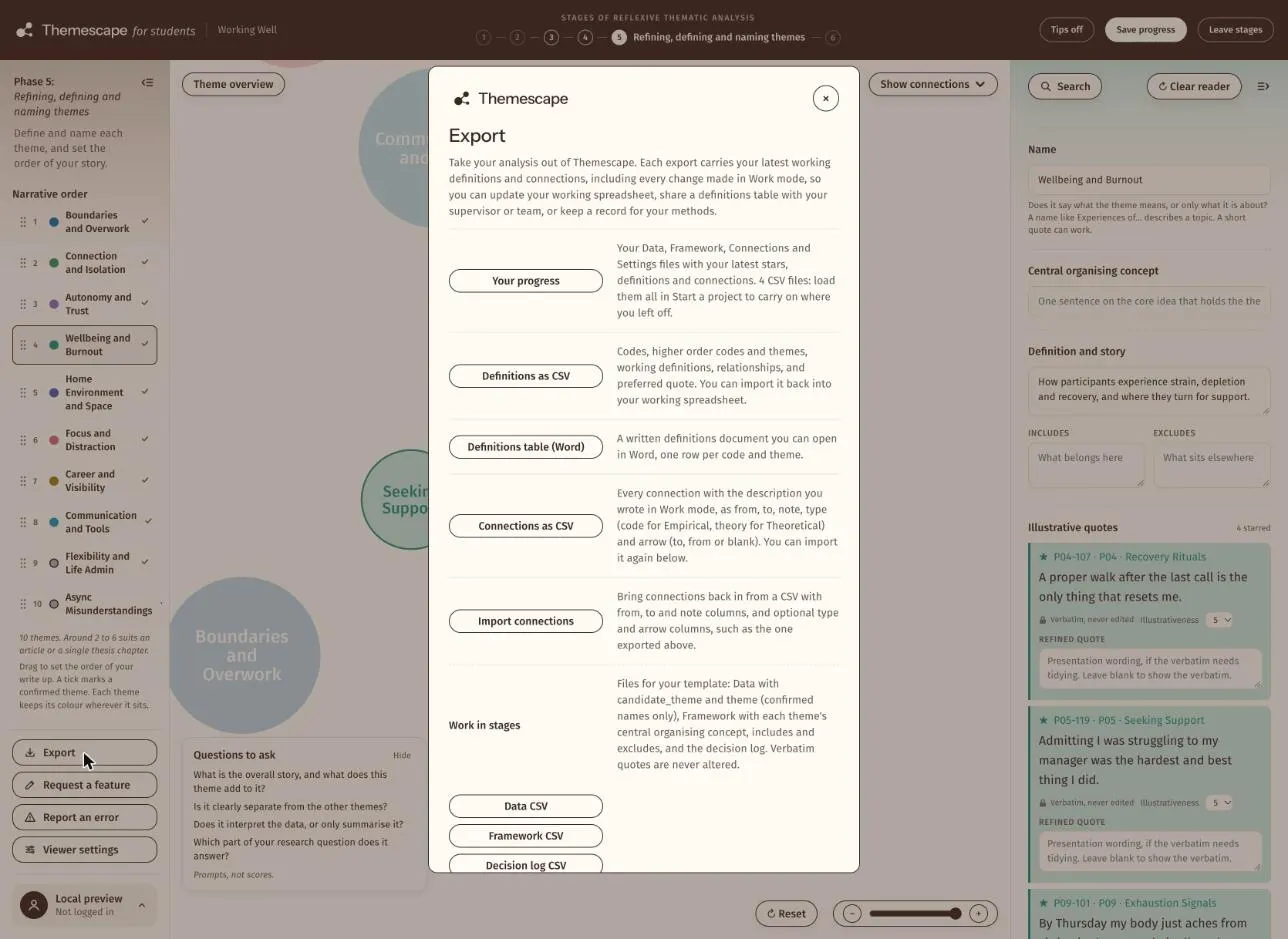
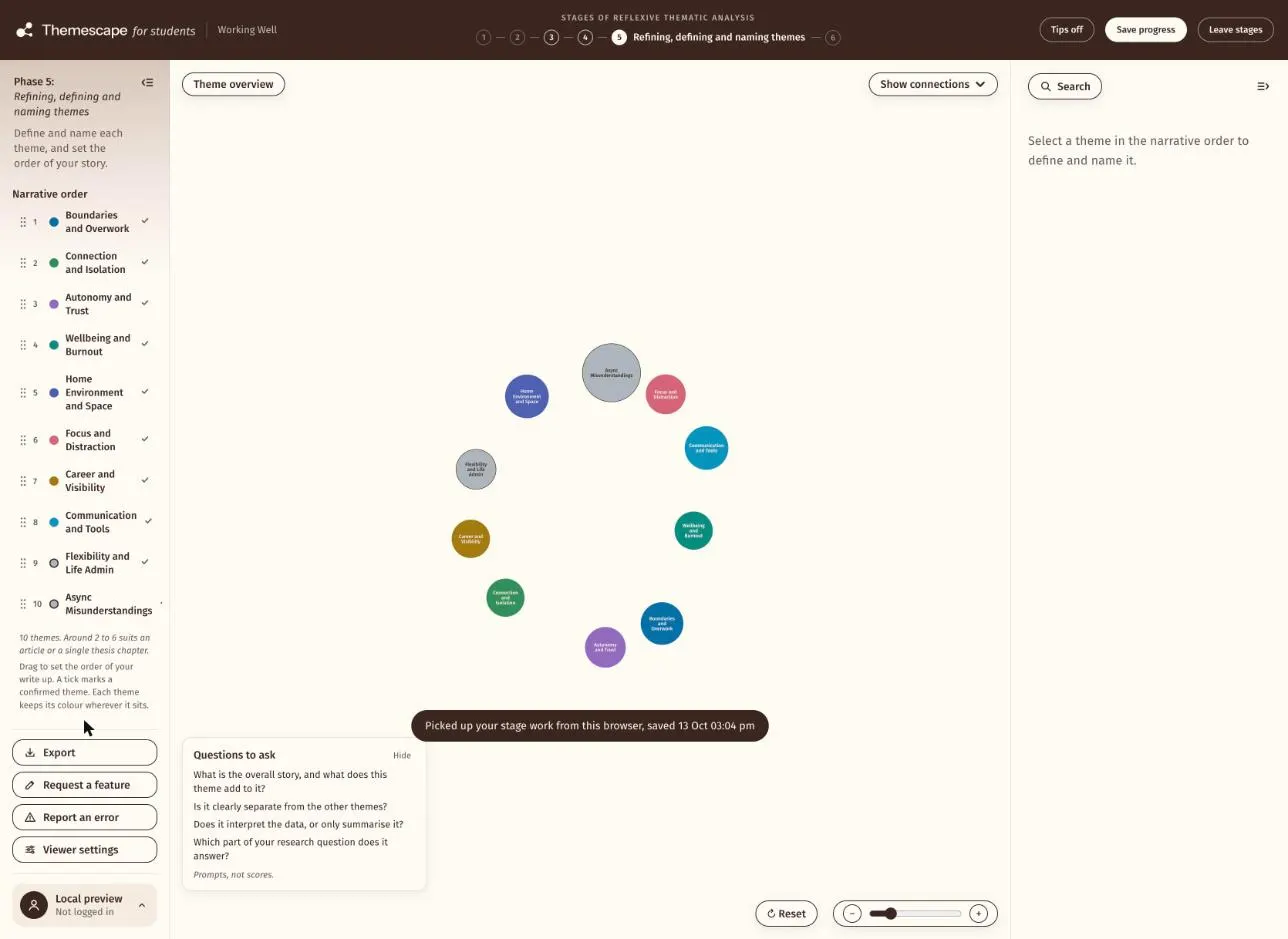
The fifth is refining, defining and naming each theme.
The sixth is writing up.
Codes and themes
A code captures one idea in a piece of data. A theme is a broader pattern of shared meaning, organised around a central idea, that brings several codes together. A topic heading, such as “workload”, is not yet a theme. A theme says something about the topic.
Showing the analysis
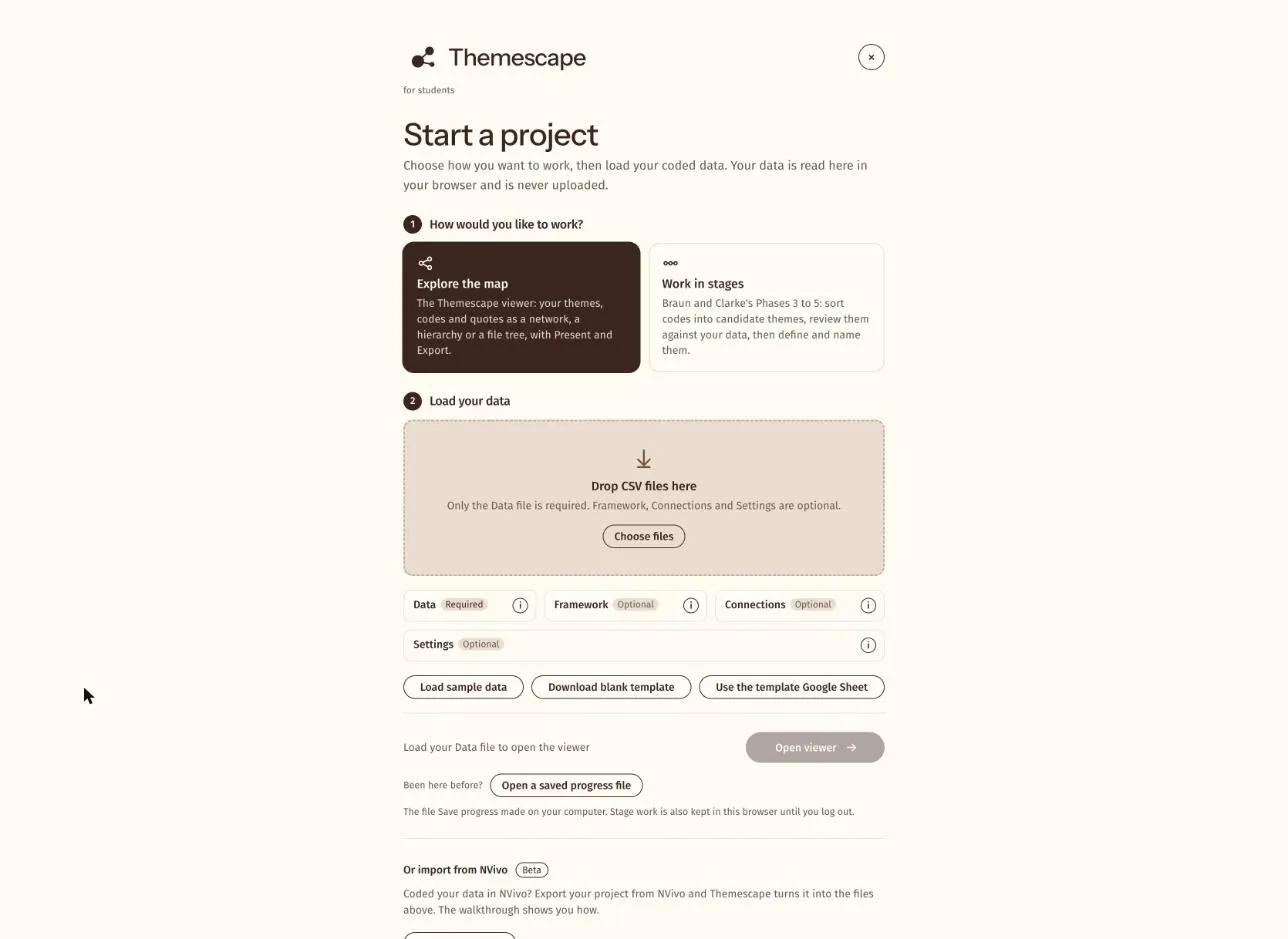
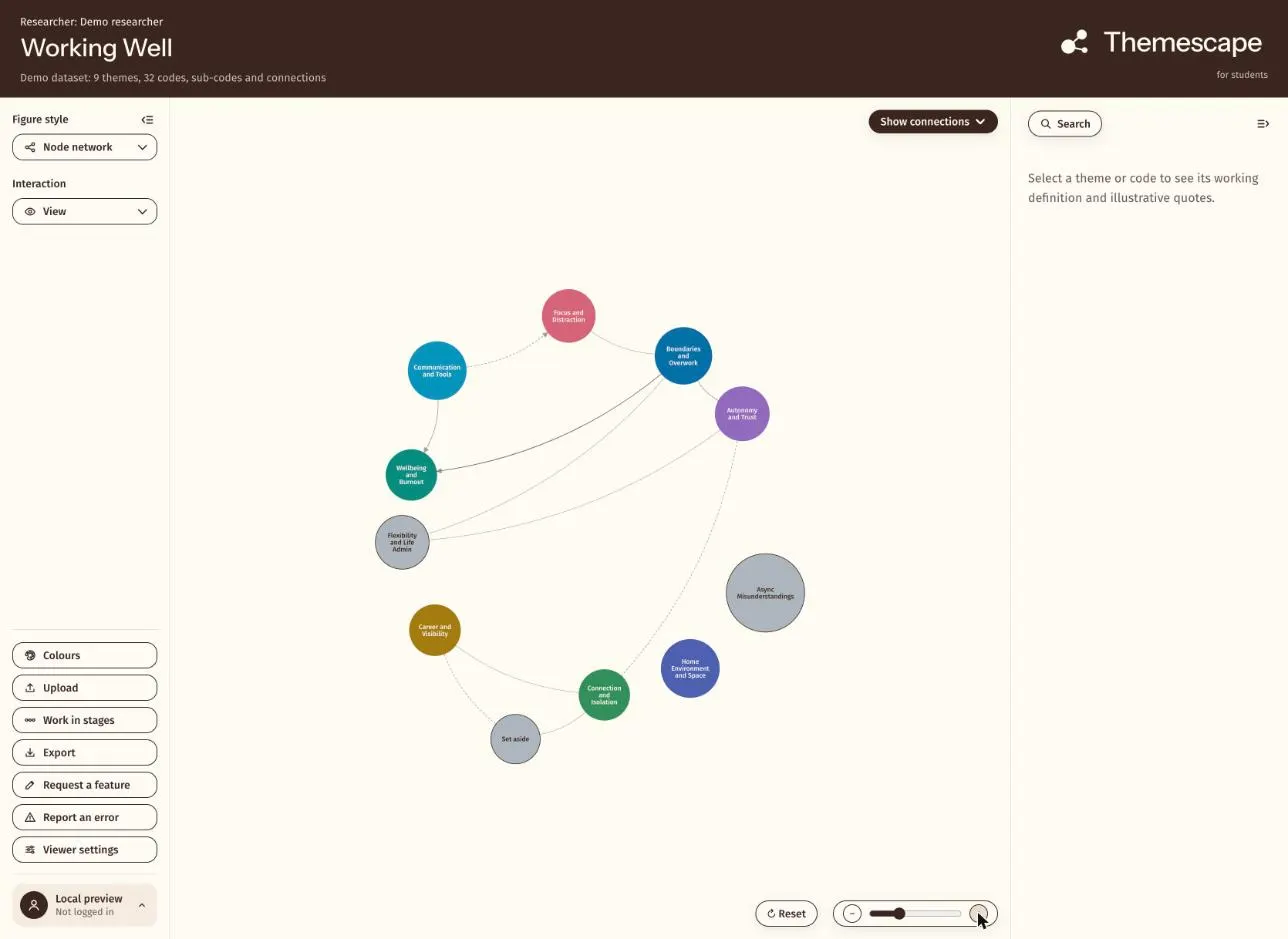
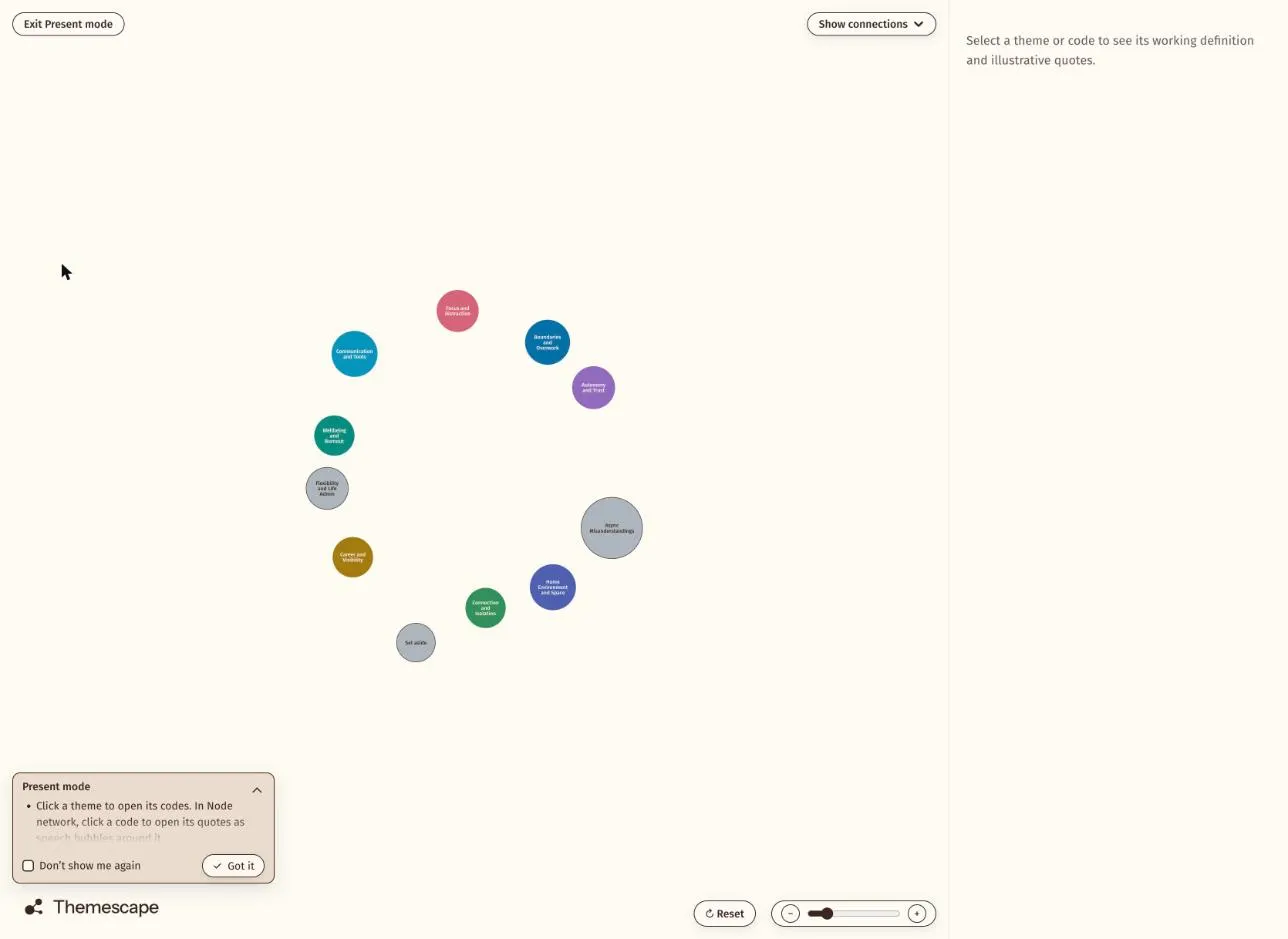
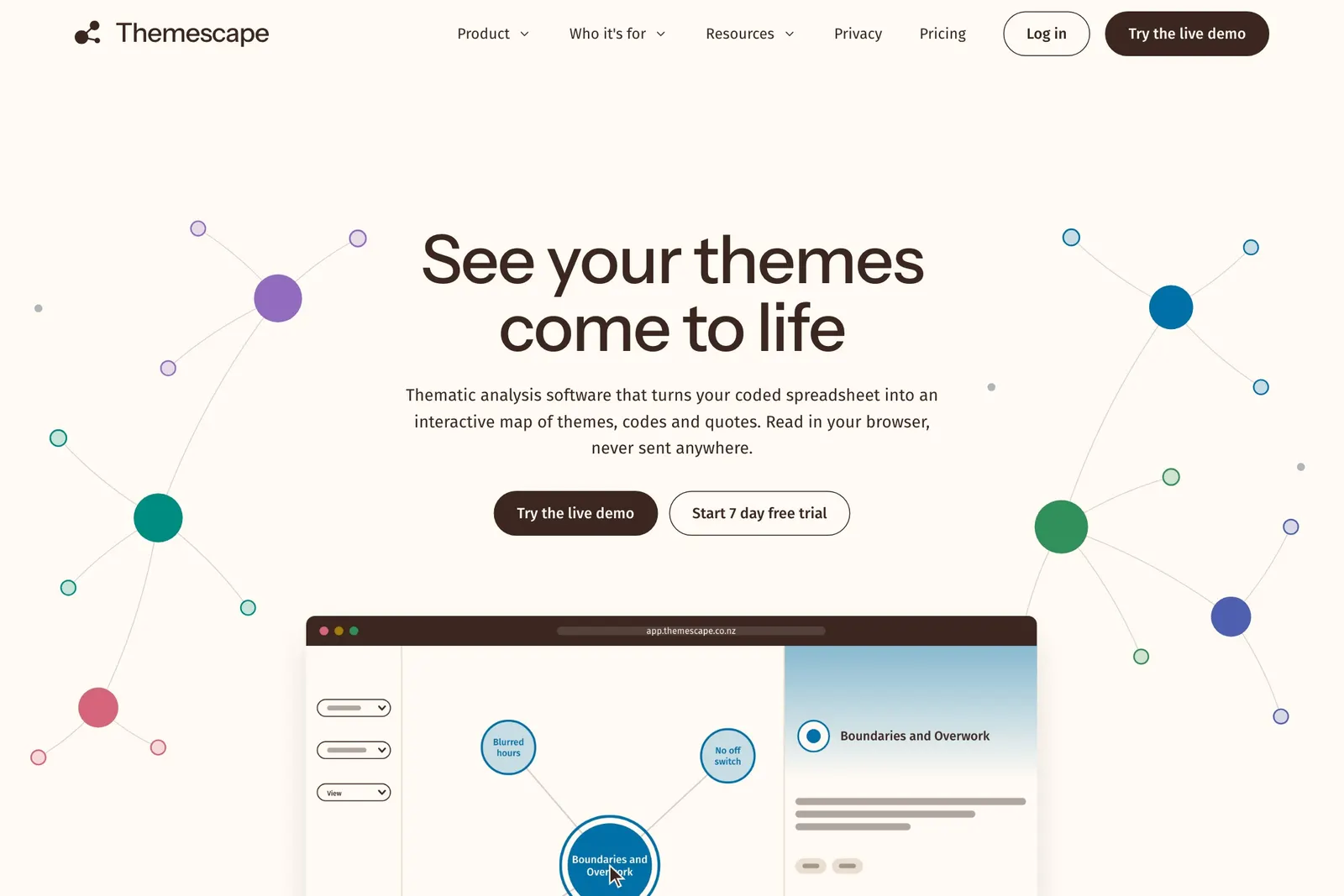
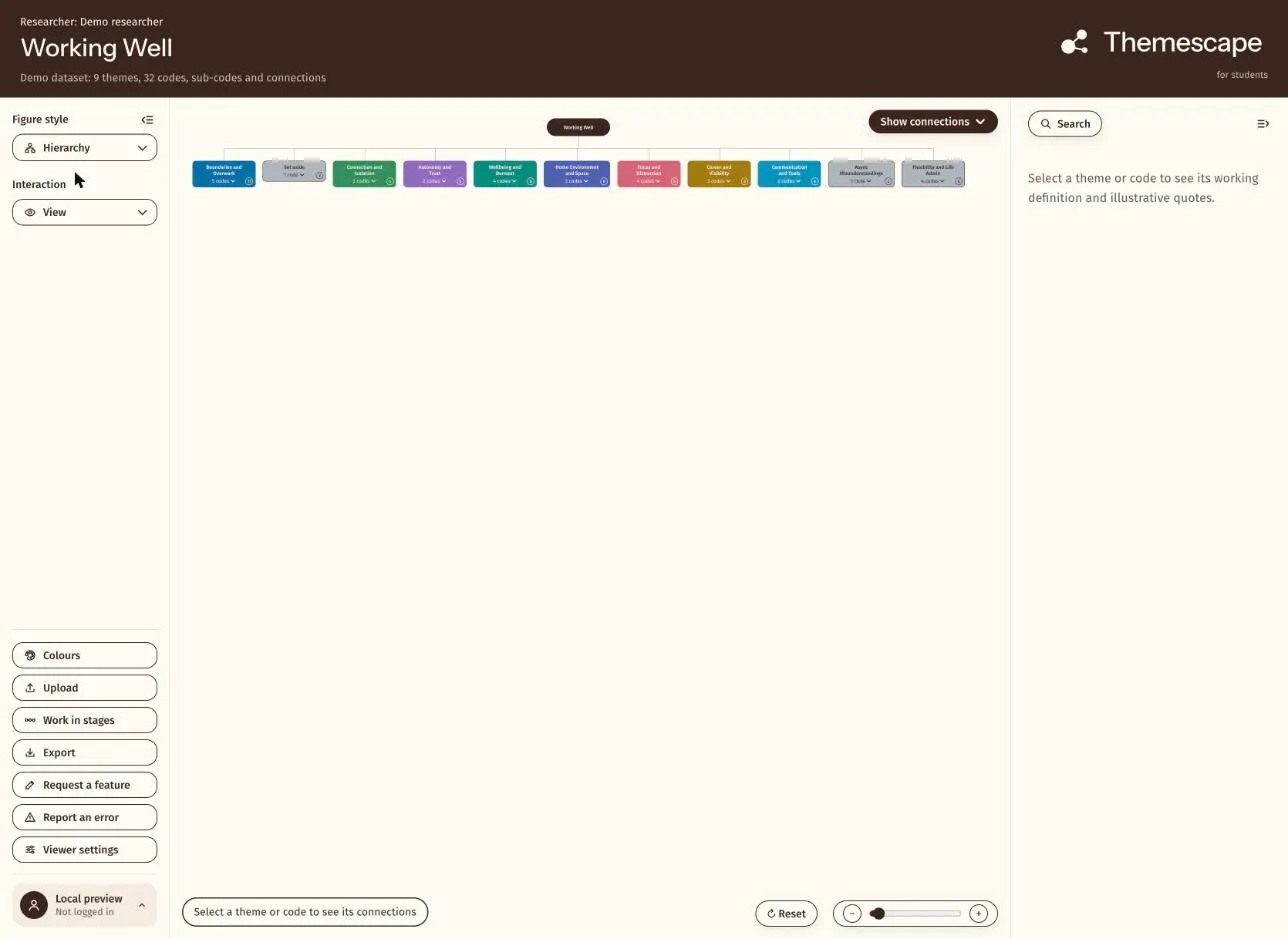
Researchers often draw a thematic map to show how their themes and codes relate. Themescape is a viewer that turns a coded spreadsheet into a map of themes, read in your browser so your research data never leaves your machine.
Further reading
Braun, V., and Clarke, V. (2006). Using thematic analysis in psychology. Qualitative Research in Psychology, 3(2), 77 to 101.
Braun, V., and Clarke, V. (2019). Reflecting on reflexive thematic analysis. Qualitative Research in Sport, Exercise and Health, 11(4), 589 to 597.